
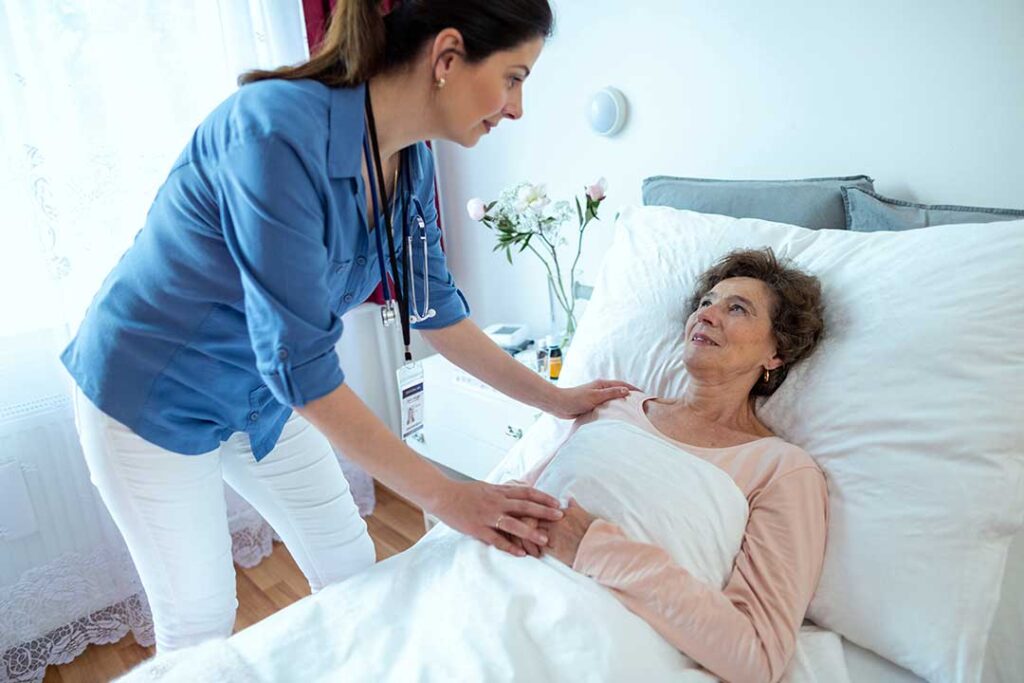
Technology in assisted living is most useful when it supports everyday care without replacing human attention. In Cheltenham, PA, residents and families may see technology used for medication reminders, emergency response, communication, fall prevention, health monitoring, and social connection.
The purpose is not to make care feel automated. Properly chosen tools should help residents remain comfortable, independent, and involved while giving caregivers better information to respond to changing needs.
How does technology improve daily life in assisted living?
Technology can make routines easier to manage and help residents receive support at the right time. Common examples include electronic medication reminders, accessible call systems, digital calendars, and voice-activated controls for lights or room temperature.
These tools can be especially helpful for residents who have mild memory changes, limited mobility, hearing or vision loss, or difficulty managing several daily tasks at once.
Technology may assist with:
- Reminding a resident about medications, meals, activities, or appointments
- Allowing a resident to request help from a room or common area
- Adjusting lighting or temperature without walking across the room
- Providing large-print clocks, captions, amplified sound, or screen readers
- Helping staff document care routines and changes in condition
- Supporting video calls with family members
The benefit often comes from reducing small sources of stress. A reminder or easy-to-use control can help a resident complete a task independently rather than waiting for assistance.
What safety technology is commonly used?
Safety systems in assisted living are designed to identify emergencies quickly and make it easier for residents to request help. Their value depends on proper installation, regular testing, and staff response procedures.
Examples may include emergency call buttons, wearable pendants, pull cords, motion sensors, door alerts, and bathroom assistance systems. Some communities also use technology that can identify unusual movement patterns, such as repeated nighttime wandering or a resident remaining inactive for an unusually long period.
Fall-detection devices may use motion sensors, wearable equipment, or room-based monitoring. They can sometimes alert staff after a fall, but they are not perfect. A device may fail to recognize an event, produce a false alert, or be removed by a resident who finds it uncomfortable.
Residents and families should ask practical questions:
- What happens after an alert is triggered?
- Is help available at all hours?
- How often are devices tested?
- What happens if the device loses power or wireless connection?
- Can the resident use the system without small buttons or complicated menus?
- Are alerts reviewed by staff or sent to an outside monitoring center?
A safety device is only as reliable as the response process behind it.
Can technology help residents manage medications?
Medication technology can reduce missed doses and provide a clearer record of whether a medication was taken, refused, delayed, or unavailable. Depending on the care arrangement, systems may include electronic medication administration records, locked dispensers, reminder alarms, and barcode scanning.
These tools support organization, but they do not eliminate the need for professional judgment. A resident may have a new symptom, difficulty swallowing, a change in appetite, or a reaction to a medication. Technology can document an event, but trained staff must evaluate what it means and determine whether additional medical attention is needed.
Families should also understand who is responsible for medication storage, reminders, administration, and communication with prescribers. These responsibilities can differ according to the resident’s care plan and applicable assisted living rules.
How is health information monitored?
Some assisted living settings use digital records to track weight, blood pressure, blood sugar, temperature, oxygen levels, sleep patterns, or other health indicators. Monitoring may be occasional or part of a structured care plan.
The goal is usually to identify changes early. For example, a pattern of reduced eating, disturbed sleep, or unusual fatigue may indicate that a resident needs further evaluation.
However, health data should be interpreted carefully. A single reading does not always show a meaningful change, and consumer devices may not be suitable for diagnosis. Staff should consider the resident’s symptoms, medical history, baseline condition, and instructions from qualified healthcare providers.
Residents and families can ask how information is collected, who reviews it, and how concerning results are communicated. Clear communication is especially important when a family member lives far away or cannot attend every care discussion.
Does technology replace personal care?
No. Technology can support care, but it cannot replace conversation, observation, reassurance, or human decision-making.
A device may identify that a resident has not entered the dining area, but it cannot fully explain whether the person is feeling ill, upset, tired, or simply choosing to eat privately. A video call can help relatives stay connected, but it does not replace an in-person visit or a familiar conversation with staff.
The strongest approach combines technology with direct interaction. Staff should continue checking on residents, noticing changes in mood or behavior, and respecting individual preferences.
Technology can also create problems if it is used too heavily. Constant alerts may increase anxiety, reduce privacy, or make a resident feel watched rather than supported. Tools should be selected according to actual needs, not used simply because they are available.
How should privacy and consent be handled?
Privacy is a central concern, particularly when cameras, location tracking, health records, or movement sensors are involved. Residents should understand what information is collected, why it is collected, who can view it, and how long it is retained.
A resident with decision-making capacity should be involved in choices about monitoring whenever possible. If a family member or legal representative participates in decisions, the resident’s preferences should still be respected to the greatest extent possible.
Questions worth asking include:
- Is video used, or does the system rely on nonvisual sensors?
- Are recordings stored?
- Who receives alerts and health information?
- How is information protected from unauthorized access?
- Can a resident decline a particular device?
- What happens if consent or preferences change?
Privacy is not limited to cameras. Even location information, medication records, and digital conversations can be sensitive.
What technology is useful for residents with memory loss?
Technology may help residents with memory loss by providing predictable prompts and reducing confusion. Large displays, automatic lighting, labeled controls, familiar music, and simple reminder systems can support daily routines.
Some systems can alert staff when a resident enters an unsafe area or leaves a designated space. These tools should be used carefully. Restricting movement without considering the resident’s rights, comfort, and care plan can create distress.
Design matters as much as function. A device with too many buttons, frequent alarms, or unclear instructions may increase frustration. Simple layouts, consistent routines, and familiar wording are often more effective than highly complex features.
What should families consider before relying on a technology system?
Families should look beyond the device itself. The most useful questions concern reliability, staff training, accessibility, and what happens during a technical failure.
Consider whether:
- The resident can use the system comfortably and independently
- Staff know how to respond to alerts
- Backup procedures exist during power or network outages
- The system works for hearing, vision, mobility, or memory needs
- Costs or replacement responsibilities are clearly explained
- The resident’s preferences are included in the care plan
- The technology adds meaningful support rather than unnecessary monitoring
Seasonal conditions can also matter. Storm-related outages, temperature changes, and disruptions to household connectivity may affect electronic systems. Assisted living settings should have backup procedures for emergency communication, medication information, and resident checks.
The most appropriate technology is usually the least complicated system that solves a real problem. For residents and families in Cheltenham, thoughtful use of technology can provide added safety and independence while preserving the personal attention that makes assisted living feel like a community rather than a collection of devices.
